
Beyond the Red Heart: The Sacred Seat of the Shen, the Wisdom of Gemstones and Herbs, and the True Love of Chosen Family
As the world dons shades of red and pink for Valentine's Day, we are invited to contemplate love. But Classical Chinese Medicine (CCM) offers a far deeper, more nuanced understanding of the Heart than what is portrayed on greeting cards or in the marketing of lingerie and romantic clichés. It invites us to explore the very core of our being—the Shen—and to understand love not just as a fleeting emotion or a physical act, but as a fundamental state of spiritual health. This article delves into the significance of the Heart and its protector, the Pericardium, explores the ancient Taoist use of gemstones and Chinese herbs to cultivate love, and reveals how the concept of "True Love" in CCM mirrors the profound connection we find in friendship—the family we choose.
The Emperor and His Protector – The Heart (Xin) and Pericardium (Xin Bao)
In classical Chinese medical philosophy, the Heart is revered as the "Emperor" of the body. It is the residence of the Shen, a term that encompasses our consciousness, mind, emotions, and spirit. The Shen is what gives us our unique "spark," our radiance, and our ability to connect with the world. As Giovanni Maciocia explains in The Foundations of Chinese Medicine, the Heart "governs the Blood and houses the Mind." A healthy Heart and settled Shen manifest as a bright, joyful, and coherent personality. Randine Lewis, in her work on fertility and the creative life force, beautifully expands on this, describing the Heart as the seat of our deepest capacity to give and receive love, a love that transcends the merely physical.
Given this supreme importance, the ancient medical masters treated the Heart with immense caution. They believed this "Emperor" was too sacred to be approached with a needle. Instead, they worked through its direct protector: the Pericardium (Xin Bao). The Pericardium is the "Heart Protector," a theoretical and functional organ that acts as a shield, defending the Heart from external pathogenic factors, particularly those of an emotional nature. As Jeffrey Yuen teaches, the Pericardium is the "gatekeeper" that filters external impressions, allowing us to engage intimately with the world without jeopardising the safety of our inner spiritual core. In ancient texts, the Heart channel itself was rarely treated, with points on the Pericardium channel used instead to influence the Heart's well-being. This highlights a beautiful principle: to protect the most sacred, you nurture and fortify its protector.
True Love and the Family We Choose
This dynamic between the Emperor and his Protector offers a profound metaphor for relationships. True love, from a CCM perspective, is not about dissolving into another person or losing oneself in passion (which could be seen as an invasion of the Shen). Rather, it is the creation of a sacred, protective space—a "Pericardium" of the relationship—where two individuals, each with a sovereign Shen, can feel safe enough to be fully authentic.
This is the love of philia: deep friendship. It is the conscious choice to honour and protect another's spirit. When we say "friends are the family we choose," we are describing this energetic truth. Our chosen family forms a protective network around our hearts. They are the ones who help us process grief (Lungs), calm our anger (Liver), ease our worry (Spleen), and share our joy (Heart) without overwhelming our Shen. They are the external Pericardium to our internal world.
The Orchestra of Emotions
The Neijing (The Yellow Emperor's Classic of Medicine) states that the Heart "is the root of life and the seat of the spirit. It manifests on the face." Joy is the emotion associated with the Heart. However, in CCM, balance is everything. A balanced state of joy is one of calm, radiant contentment. But an excess of joy—excitement or mania—can overstimulate the Heart, agitate the Shen, and lead to restlessness or insomnia. As Ted Kaptchuk notes in The Web That Has No Weaver, emotions are a normal part of life, but they become causes of disease when they are excessive or prolonged.
Each major organ is paired with an emotion:
- Heart (火 Fire): Joy. Imbalance can lead to agitation or lack of enthusiasm.
- Lungs (金 Metal): Grief and Sadness. Imbalance can create a feeling of being stuck, unable to let go.
- Liver (木 Wood): Anger. Imbalance can cause frustration, irritability, or repressed rage.
- Spleen (土 Earth): Worry and Pensiveness. Imbalance can lead to overthinking and poor concentration.
- Kidneys (水 Water): Fear. Imbalance can manifest as anxiety, paranoia, or a lack of willpower.
Gemstones – Earth's Wisdom for the Heart
In classical Taoist practice, the mineral kingdom has long been respected as a source of condensed, stable energy. Stones are not merely decorative; they are tools for cultivation, used to carry intention, anchor the Shen during meditation, and harmonise the body's energetic fields. When we work with a stone, we are borrowing the wisdom of the earth itself.
For matters of the heart, certain stones have been traditionally cherished:
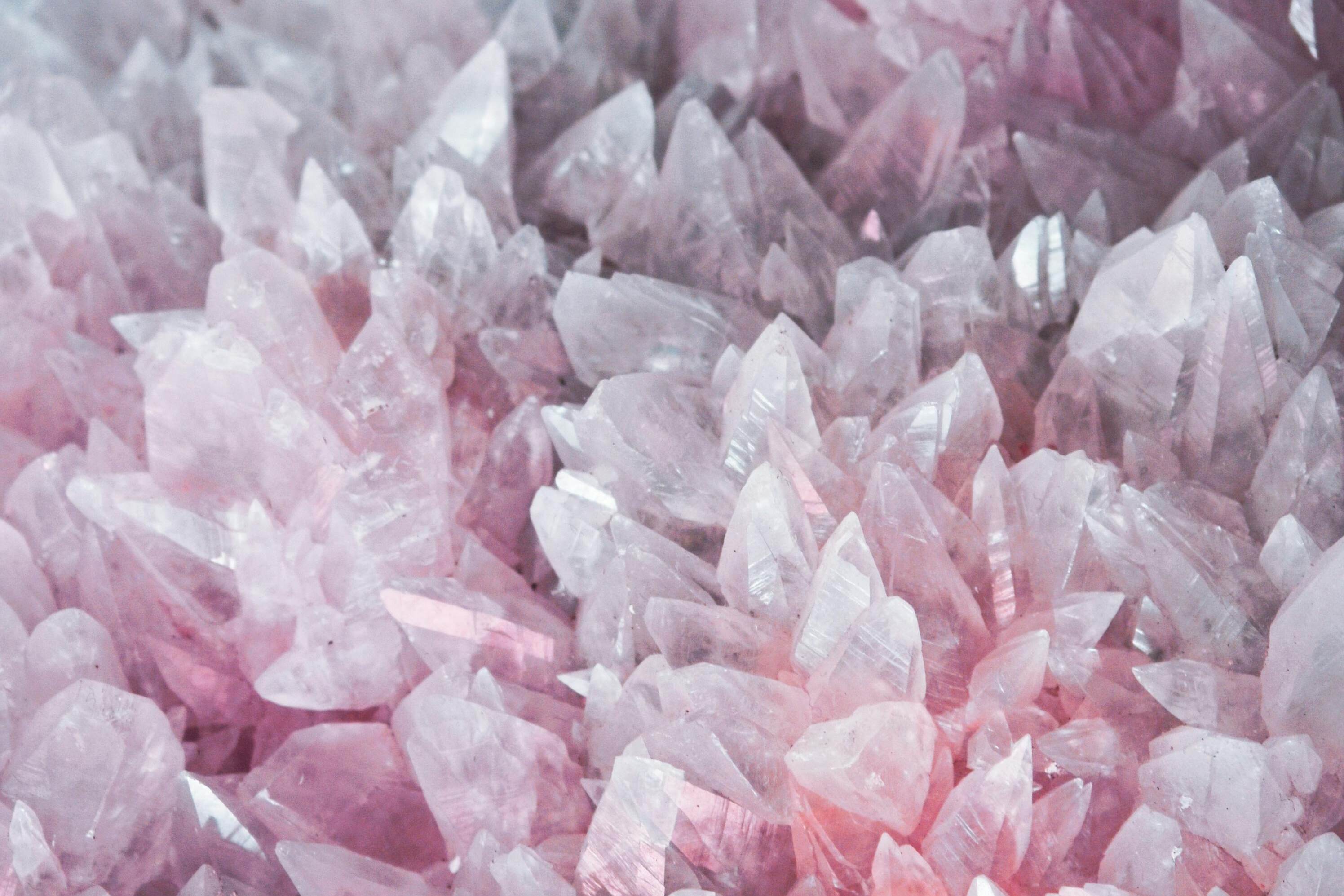
- Rose Quartz: The quintessential stone of unconditional love. Its gentle, pink energy resonates directly with the Heart. Holding Rose Quartz during meditation can help to soften defensive barriers (supporting the Pericardium's role) and open the Heart to give and receive love more freely, starting with self-love.
- Jade (Yu): In Chinese culture, jade is more precious than gold. It embodies the virtues of wisdom, courage, and compassion. Meditating with jade, particularly a piece worn close to the heart, is said to calm the Shen and connect one with a love that is steady, pure, and enduring—the love of an ancient, wise friend.
- Ruby and Garnet: These stones, with their deep red hue, are associated with blood and the vital essence (Jing). They can be used to gently warm and nourish the Kidneys, the root of our life force. In Taoist practice, a warm Kidney is essential for a vibrant Heart. Placing a small, smooth ruby or garnet on the lower abdomen during meditation can help to anchor the spirit and build the deep, embodied vitality from which true passion flows.
- Pearl: Ground pearl powder was historically used in Chinese medicine to calm the Shen and cool the Heart. A pearl itself, held or worn, carries this same energy of serene, lunar wisdom, helping to settle an agitated spirit.
To use them, simply hold the stone in your hand, place it on your heart centre, or wear it as jewellery, setting a clear intention to cultivate a specific quality of love.
The Apothecary of the Heart – Chinese Herbs and Formulae for the Shen
Alongside gemstones, the Chinese herbal tradition offers a profound pharmacy for the heart. These are not just biochemical agents; they are beings with their own energetic signatures, carefully chosen to enter the Heart channel, nourish its Blood, calm its Spirit, and support its Protector.
Key Herbs for the Heart and Shen:
- Longan Fruit (Long Yan Rou): This sweet, warm herb is one of the most direct tonics for Heart Blood. It is used when the Heart is "hungry" – when there is insufficiency of Blood to anchor the Shen, leading to anxiety, poor memory, and a feeling of being unsettled. It gently nourishes and calms, like a warm, sweet hug for the spirit.
- Schisandra Berry (Wu Wei Zi): Known as the "five-flavour fruit" because it contains all five tastes, Schisandra is astringent and tonifying. It is revered for its ability to anchor the Shen, preventing it from "floating" upwards in states of agitation, palpitations, or insomnia. It protects the Heart by holding its essence close.
- Polygala (Yuan Zhi): Its name means "far-reaching ambition," and this herb is a marvellous communicator. It opens the portals of the Heart, clearing phlegm-mist that can cloud the Shen and helping to connect the Heart with the Kidneys, fostering the deep communication between fire and water that underlies emotional resilience.
- Spiny Jujube Seed (Suan Zao Ren): This is perhaps the premier herb for calming the Shen when there is Heart Blood or Heart Yin deficiency. It nourishes the Liver and Heart, anchoring the spirit in cases of insomnia, night sweats, and irritability. It is the herb of choice for a mind that cannot stop thinking long enough to rest.
- Biote (Fu Shen): This is the fungus that grows on the root of pine trees, specifically the part that wraps around the root. It is the "Shen of the pine," and it is used specifically to settle a floating, anxious Shen. It is particularly good when worry and overthinking disturb the spirit.
- Reishi Mushroom (Ling Zhi): The "mushroom of immortality." Its neutral, calm energy gently nourishes the Heart and anchors the Shen. It is used to support the spirit over the long term, building resilience and a deep sense of peace.
Chinese Herbal Formulae:
These are carefully balanced combinations of herbs, traditionally prescribed by qualified practitioners to address specific patterns of disharmony.
- Tian Wang Bu Xin Dan (Emperor's Tea or Heaven's King Nourishing the Heart Pill): This is a classical formula for nourishing the Heart and calming the Shen when there is deficiency of both Heart Yin and Blood, often with concurrent Kidney Yin deficiency. It contains herbs like Rehmannia, Longan Fruit, and Schisandra. It is for the person who is exhausted, anxious, forgetful, and burning the candle at both ends – their spirit is tired and needs deep nourishment. It is called "Emperor's Tea" because it is fit for a ruler whose spirit is weary.
- Suan Zao Ren Tang (Sour Jujube Seed Decoction): A foundational formula for Liver Blood deficiency impacting the Heart, leading to insomnia, irritability, and a feeling of being easily startled. It centres around the powerful Suan Zao Ren and is a gentle, profound way to invite the spirit home to rest.
- Gan Mai Da Zao Tang (Licorice, Wheat, and Jujube Decoction): A simple, beautiful, and ancient formula from the Zhang Zhong Jing tradition. It is used for a condition sometimes described as "agitated Shen" or "hysteria" – a feeling of uncontrollable sadness, a desire to cry, and a sense of being unanchored. The sweet, nourishing nature of these three ingredients (wheat, licorice, and jujube) gently restores a sense of groundedness and calm to a distressed Heart.
These herbs and formulae are best prescribed by a qualified practitioner, as they are potent medicines that need to be matched precisely to an individual's pattern.
Helping the Organs Find Balance
Just as we support a friend in need, we can support our own organ systems when they are out of balance.
- For the Heart (Joy out of balance): If you feel manic or agitated, create space for quiet. Meditation, spending time in silence, and avoiding overstimulation helps the Shen to settle. Acupuncture points like Heart 7 (Shenmen) are renowned for calming the spirit. Meditate with a pearl or a piece of blue lace agate. Herbal support may include Suan Zao Ren or Fu Shen.
- For the Lungs (Grief): Grief needs to be expressed and released. Practices that connect you with the breath, such as Qigong and gentle yoga, are profoundly healing. Allow yourself to cry and talk about your feelings with your chosen family. Hold a piece of clear quartz to amplify your intention to release.
- For the Liver (Anger): Move the energy. Physical exercise, stretching, and expressing your feelings assertively (not aggressively) can help. The Liver point Liver 3 (Taichong) is a powerful point for moving stuck energy. Work with green stones like aventurine or jade to soothe the Liver.
- For the Spleen (Worry): Ground yourself. Focus on nourishing, cooked meals, spend time in nature, and practice mindfulness to bring your awareness back to the present moment. Hold a piece of golden tiger's eye or a smooth, earthy stone to feel centred.
- For the Kidneys (Fear): Find your inner strength. Meditation, especially on your core values, and practices that build a sense of safety and security are key. Acupuncture can strengthen the Kidney Qi. Warm the area with a small ruby or garnet during deep breathing.
This Valentine's Day, let us celebrate the heart in its truest sense. Let us move beyond the superficial and connect with the profound. Honour the Shen within you and within your chosen family. Nourish your Pericardium by creating relationships that act as a safe and loving shield. Let the wisdom of the earth, in the form of sacred gemstones and potent herbs, support your cultivation of love. For in the wisdom of Classical Chinese Medicine, the highest form of love is not a feverish passion, but a deep, calm, and protecting radiance that allows all spirits to thrive
The Dancing Crane Acupuncture website, social media and newsletters, offers insights rooted in Classical Chinese Medicine and Holistic Health principles. This content is for educational purposes only and should not replace personalised medical advice or treatment. For tailored guidance, we recommend consulting a qualified natural healthcare practitioner or licensed medical professional.